



Estimating Your Electricity Needs for the 2027 Chevrolet Bolt in Mesa, AZ
For drivers in Mesa, AZ considering the highly efficient 2027 Chevrolet Bolt, understanding electricity consumption is key to planning your daily and weekly charging. This guide from AutoNation Chevrolet Mesa will help prospective owners convert their driving habits into estimated electricity needs, ensuring a smooth transition to electric vehicle ownership.
How Much Electricity Does the 2027 Chevrolet Bolt Use?
The 2027 Chevrolet Bolt is designed for efficiency, providing a clear benchmark for its electricity use. Based on verified specifications, the Chevrolet Bolt has an EPA electricity consumption rating of 28 kWh per 100 miles. This metric is a useful starting point for anyone looking to understand how much energy their daily commute or weekend errands will require. With an EPA-estimated driving range of 262 miles on a full charge, the Chevrolet Bolt offers substantial capability for many drivers.
How Can You Estimate Electricity Needs From Daily and Weekly Mileage?
Estimating your electricity needs for the 2027 Chevrolet Bolt involves a simple calculation using its EPA consumption rate. If you drive 50 miles in a day, you would use approximately half of the 28 kWh per 100 miles, which is 14 kWh. For a weekly total of 250 miles, you would estimate needing 2.5 times the 28 kWh, totaling 70 kWh. This straightforward approach allows you to project how often you might need to charge, depending on your typical driving patterns in and around Mesa.
What Is the Difference Between Battery Capacity, kWh, and MPGe?
Understanding electric vehicle terminology is important for 2027 Chevrolet Bolt owners.
Battery Capacity: This refers to the total amount of energy a battery can store. The Chevrolet Bolt has a battery rated energy of 65 kWh. This capacity determines how much electricity the vehicle can hold, directly influencing its driving range.
kWh (kilowatt-hour): This is a unit of energy, much like a gallon of gasoline. It measures the amount of electricity used or stored. When you charge your Bolt, you are adding kWh to its battery. The EPA electricity consumption of 28 kWh per 100 miles tells you how many kilowatt-hours are needed to travel that distance.
MPGe (Miles Per Gallon equivalent): This metric helps compare the energy efficiency of electric vehicles to gasoline vehicles. The 2027 Chevrolet Bolt boasts an impressive EPA fuel economy of 134 city, 106 highway, and 120 combined MPGe. This indicates how far the Bolt can travel on an amount of electricity that has the same energy content as one gallon of gasoline. The battery chemistry for the Bolt is Lithium iron phosphate.
How Long Does It Take to Replenish the Electricity Used While Driving?
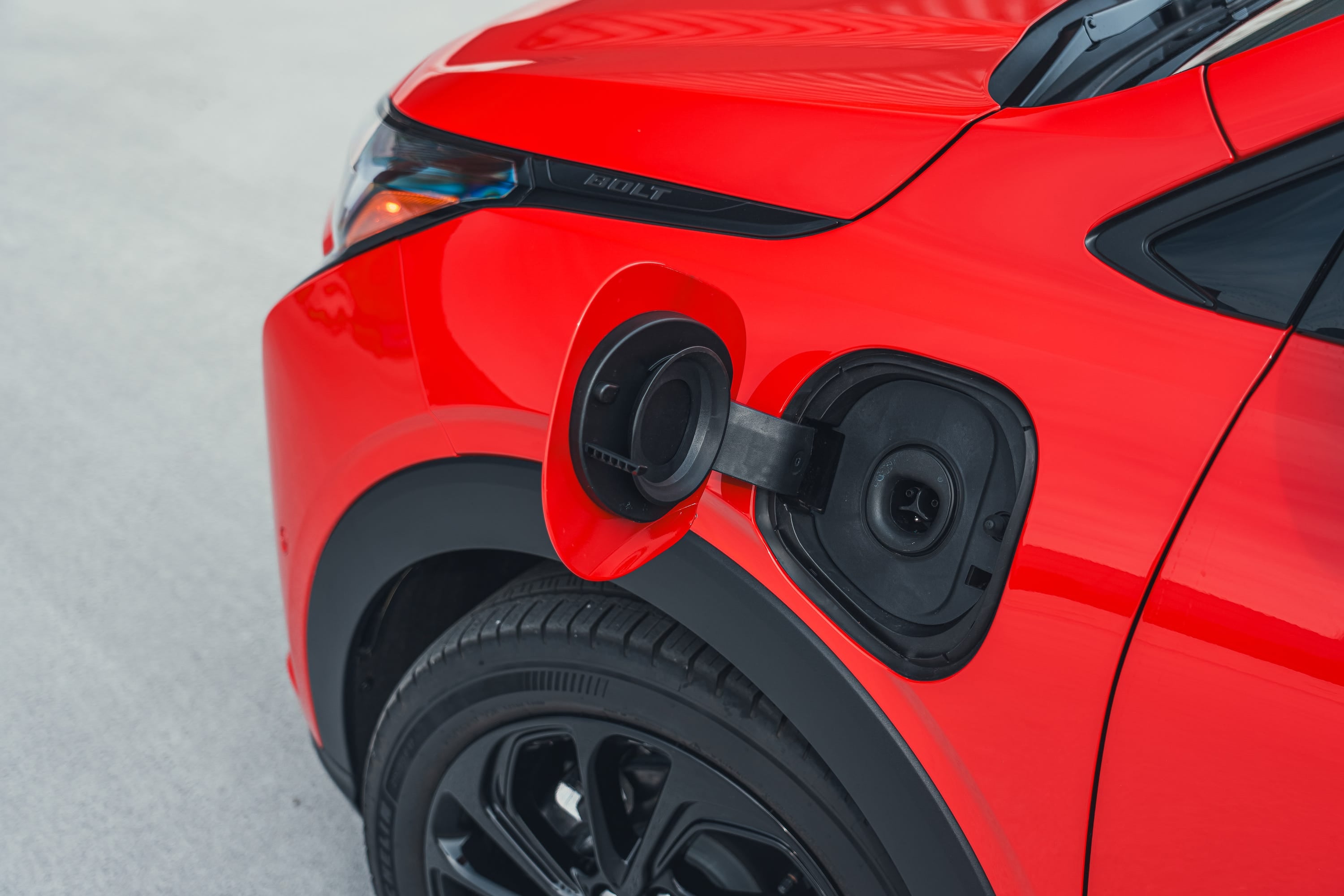
The time it takes to replenish the electricity used by your Chevrolet Bolt depends on the type of charging you use. There are typically three main levels of charging:
Level 1 Charging: Uses a standard 120-volt household outlet. This is the slowest method, best for overnight charging to top off smaller amounts of daily driving.
Level 2 Charging: Uses a 240-volt outlet, similar to what a clothes dryer uses. This is a common home charging solution and significantly faster than Level 1, capable of fully charging the 65 kWh battery overnight or in several hours, depending on the charger. Many public charging stations in Mesa also offer Level 2 charging.
DC Fast Charging: This is the quickest way to add significant range to your 2027 Chevrolet Bolt, often found at public charging stations. It can rapidly add many miles of range in a shorter period, ideal for longer trips or when you need a quick boost. The actual charging speed can vary depending on the charging station's power output and the vehicle's state of charge.
How Does Mesa's Summer Heat Affect Bolt Electricity Consumption?
Drivers in Mesa, AZ are familiar with high temperatures, and it is worth noting how extreme heat can influence electric vehicle performance. Using the air conditioning system extensively in the 2027 Chevrolet Bolt, especially during Mesa's hot summers, will draw power from the battery, which can slightly reduce the overall driving range and increase electricity consumption. Battery performance can also be affected by extreme temperatures, with very hot or very cold conditions potentially impacting efficiency. However, the Bolt is engineered to manage these conditions, and its robust battery system is designed for reliability.
Why Buy From AutoNation Chevrolet Mesa
When considering a new Chevrolet Bolt, AutoNation Chevrolet Mesa is your trusted dealership in Mesa, AZ. Our team is dedicated to providing clear information and excellent service, helping you understand all aspects of electric vehicle ownership. We are committed to assisting you in finding the perfect vehicle to fit your lifestyle and driving needs.
FAQ
Q: How accurate is the EPA electricity consumption rating for daily driving?
A: The EPA rating of 28 kWh per 100 miles for the 2027 Chevrolet Bolt is a standardized estimate. Actual consumption can vary based on driving style, terrain, use of climate control, and road conditions.
Q: Can I charge my 2027 Chevrolet Bolt at home?
A: Yes, the Chevrolet Bolt can be charged at home using a standard 120-volt outlet (Level 1) or a faster 240-volt charger (Level 2), which is often installed by an electrician for convenience.
Q: Is the 2027 Chevrolet Bolt suitable for longer trips outside of Mesa?
A: Absolutely. With an EPA-estimated driving range of 262 miles and access to public DC Fast Charging networks, the Chevrolet Bolt is well-equipped for longer journeys, allowing you to plan stops for quick recharges.
To learn more about the 2027 Chevrolet Bolt and its impressive capabilities, or to discuss your specific electricity needs, visit AutoNation Chevrolet Mesa in Mesa, AZ. Our knowledgeable team is ready to assist you.
Written for AutoNation Chevrolet Mesa
By the USA TODAY Network Automotive Insights Team, in collaboration with https://vehiclesforsalenearphoenix.com/ and the Vehicles For Sale Near Arizona Republic Edition.
Disclaimer: This article's content is intended for informational purposes only. Vehicle specifications and features are based on data provided by J.D. Power and local dealerships and may vary by individual vehicle, VIN, trim, configuration, packages, and optional equipment. Vehicle images may not depict the exact model, trim, features, packages, accessories, or specifications described. Vehicle pricing, availability, features, and specifications are subject to change without notice. Please reference the dealership's vehicle listing and window sticker or consult the dealership directly for complete and accurate details.